Author Archives: Jane

Sew 16 – Composing outfits

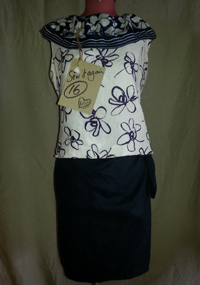
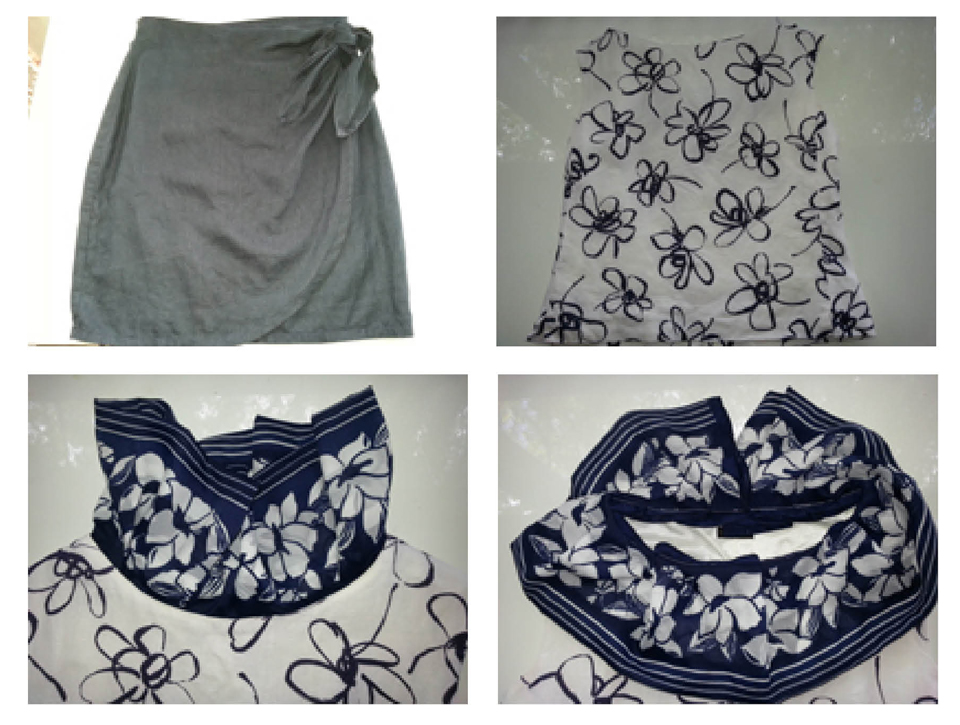
linen outfitThis outfit is a compilation of three items gathered separately which I brought together in a wardrobe try-on session.

It is easy to end up with a lot of oddments and separates in the wardrobe, doubly so when you buy op shop as I do. So instead of having a scramble each morning about what goes with what, I have sessions where I bring together all the mishmash stuff and create outfits which then hang together.

Dressing this way, you never see anyone else in the same outfit – as can be problem when you buy the latest fashion trend.

In their book Paris Street Style: A guide to effortless chic,  Isabelle Thomas & Frédérique Veysset say we express our idea of who we are by the clothes we wear. It’s an unconscious, unspoken language that we direct at other people.

“You have to find your own look. There’s no need to knock yourself out to stand out; all that’s required is to be aware of who you are. If you are that, you can develop a harmony between your clothes and your personality. It’s not a question of age or money, more of a state of mind and an intention.”

They quote sociologist Patricia Delahaie as follows: Today, in the era of individualism, everyone can live and dress their own way, inventing themselves and the images that suit them best. Everything is possible now … your look reveals quantities of information about you. To what tribe do you belong? What image of yourself do you want to project? Do you wish to join the mass, or do you need to assert that you’re different? Is it your intention to be seen, or would you prefer to stay in the background? Are you eager to express your creativity, do you need to display the sides of yourself that are sporty, asexual or even rigid?

There wasn’t much sewing involved in today’s offering. The linen wrap-around skirt (Turtle Creek) is as found in an op shop. The designer linen top (Carla Zampatti) is also as found in op shop, except for the add neck scarf – a cast-off from my sister which I thought was a perfect lift to bring the outfit together. It is just stitched on the inside of the neckline and can be easily removed if preferred.
putting outfits together

Sew 15 – Silk au natural

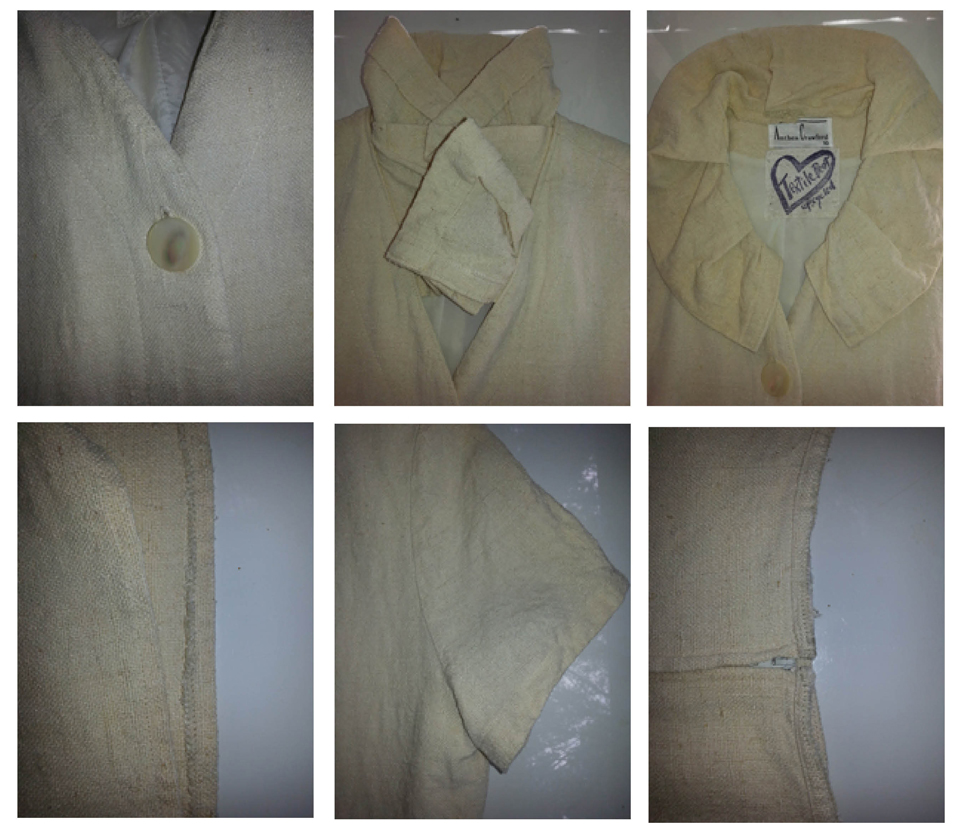
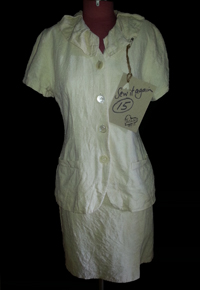
raw silk suitSilk has a natural glow which draws my eye and this beautiful Anthea Crawford raw silk suit shines with integrity after a hand wash, no iron, and a few tweaks to update it.

As you many know, silk is produced from the chrysalis of silkworms.   In her book Sustainable Fashion and Textiles: Design Journeys, Kate Fletcher says most commercially produced silk is cultivated and involves feeding the worms a controlled diet of mulberry leaves under special conditions.

The fibres are extracted by steaming to kill moth chrysalis (because if the moth is left to emerge the silk filament is damaged) and then washed in hot water to degum the silk. Sounds a bit grim – and all the more reason to treasure and reuse garments, and just wash and hang rather than dryclean and/or iron.

This book by Kate Fletcher was the first I read during postgraduate study last year which informed my journey to inspire upcycling natural fibre clothing for pleasure, reward and sustainability.

Its eight chapters provide innovative ways of thinking about fabrics and garments based on sustainability values and a broad, interconnected view of design that I will return to many times during this 365-day eco-clothing project.

Kate’s book includes actions and ideas, using practical skills and creative thinking to innovate, ways of working or visions compatible with sustainability – all drawn together into a holistic, multi-layered way that is roots-based, nature-inspired and an interconnected vision for the future.

Each of us can make a difference through small changes in the way we dress and the clothing we wear. Why buy new-new when you can make old-new?

I wondered whether I should remove the Anthea Crawford label from this suit and decided not to. The garment retains all the integrity of the original design, fabric and shell buttons – and I’ve just made a few small adaptations to give it a second life. I removed the shoulder pads, cropped the sleeves and the chunky waistband. I also trimmed the skirt length, and added this as a collar by sewing to the inside neckline, using a few tucks to make it fit, and then letting it drape over itself.

raw silk suit updated

Sew 14 – Textile metaphors

Cotton swing dress

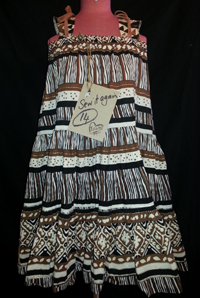
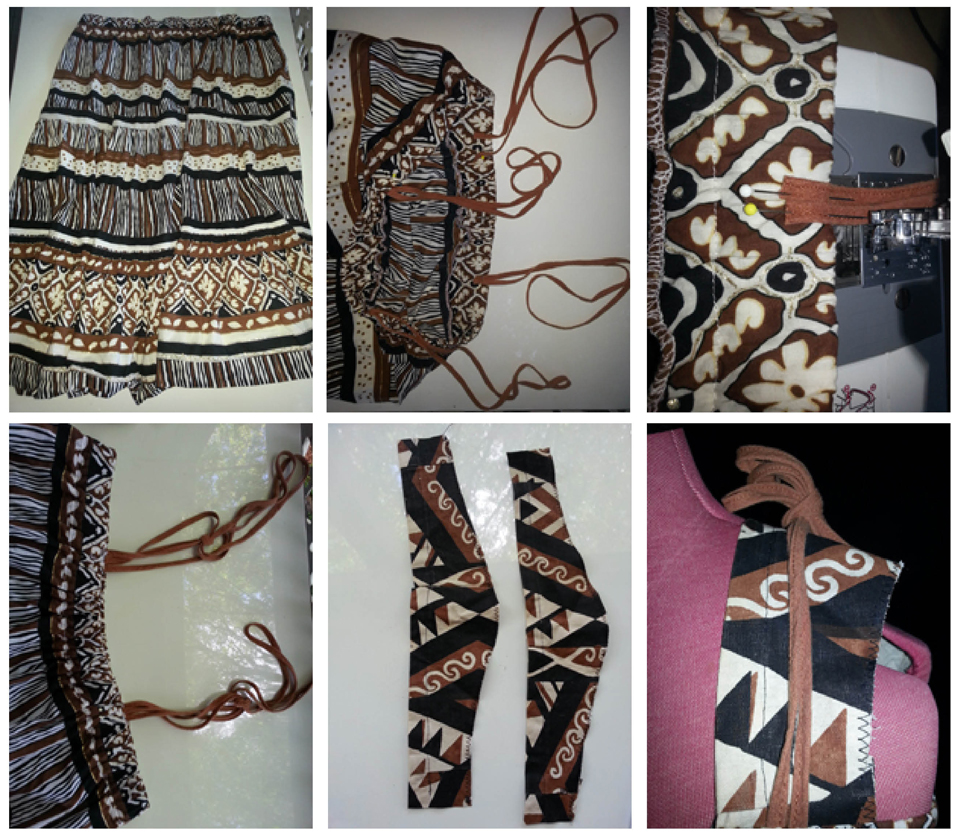
This fabric has a tapa-cloth look but it’s just an ordinary cotton skirt turned into a dress by adding shoulder straps.

Tapa cloth is made from bark and one of many naturally-derived textiles that form society’s early story-telling history.

Beverly Gordon says in her book Textiles: the whole story, there are some potent textile metaphors that are now part of our everyday vernacular describing life experiences.

We talk of ‘spinning a yarn’ when we draw out words and put them together to tell a tale, and we ‘put a spin on’ ideas or events, shaping them as we would like them to be.

People who dabble in magic ‘weave’ spells. These days we also follow ‘threads’ in online conversations, as our discussions weave in and out of each other.

We talk about life ‘hanging by a thread’, which reminds us of our fragility and the preciousness of our time on Earth. Fibre terms are used to describe deterioration or coming apart – things are frayed, ripped, tattered or shredded.

Gordon says a new textile, like a new life, is clean and fresh, and unused cloth often functions as a symbol of purity as well as wholeness. In contrast, worn cloth represents the end of wholeness and, like a worn-out life, has little future.

Through this 365-day eco-clothing project, I’m creating a new story about worn cloth by using creativity and imagination to stitch-up a second life for discarded garments.

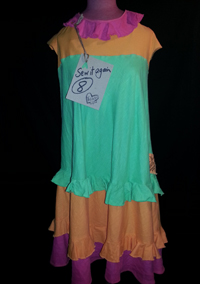
Today’s offering was a long, full skirt found in an op shop. It makes a cool, loose dress when strappy shoulders are added. For the straps, I used fabric scraps from two other garments. The spagetti straps looked a bit plain so I added another layer of similar fabric for interest and balance. Pin straps in place before sewing, and adjust the position or length according to your preference.

upcycling skirt to dress with straps

Sew 13 – Linen has longevity

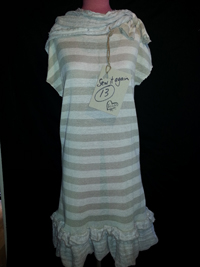
Linen knit Linen is one of my favourite natural fibres and a linen knit is a rare thing. Linen is made from the flax plant, not grown commercially in Australia, and arguably the world’s oldest fibre.

It is cool to wear, becomes softer with age and you can tell something is linen from the way it crinkles after washing. I never iron it because I love the crushed look of 100% linen.

Flax is grown in Europe and apparently world demand for flax peaked in 2005 at 709,000 tons and suffered demand destruction of 123,000 tons in 2006. It recovered to 705,000 tons in 2009 and declined again in 2010 to 682,000 tons. FAO textile consumption survey 2013

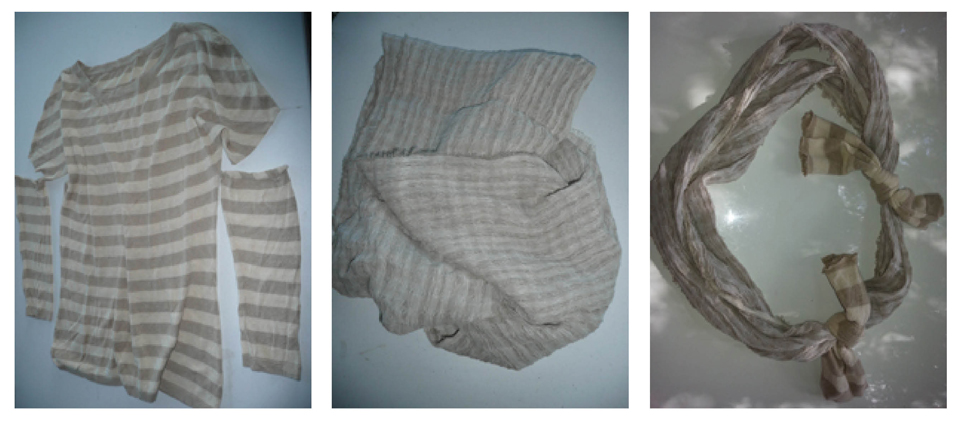
This garment was a long top but the sleeves were too tight relative to the body of the garment so I cropped them off and just used zigzag stitch to secure the raw edge.

I extended the length to become a dress using linen fabric which I gathered up and then doubled over before stitching to the bottom of the top. I knotted the sleeve off-cuts to a strip of linen fabric to form a scarf, which is doubled over and draped around the neckline as a collar.

linen knit adaptation

Sew 12 – Adventure in imagination

Cotton skirt with silk trimsThis skirt once was a plain but well-made cotton drill skirt which was going begging so I gave it a new lease on life by adding assorted silk and linen stripes using waste fabric.

I get a fantastic sense of satisfaction from making something out of not much, living a more creative and meaningful existence. Those words are straight out of the mouth of Kevin McCloud in his Seaside Shack series on ABC1.

Kevin said making something fresh out of not much is rather fun. Upcycling is an adventure into our imagination – and the experience of making things is powerful and enriching.

“The pleasure is in the making and doing, not buying and consuming,” Kevin said. “Making things with your hands, you feel like you have done something, achieved something.”

“The best kind of recycling is when you take things and transform them into something special that looks like it is really expensive.”

While Kevin’s design challenge is adapting reclaimed and upcycled building materials to a new use – mine is to adapt, reuse and upcycle discarded clothing.

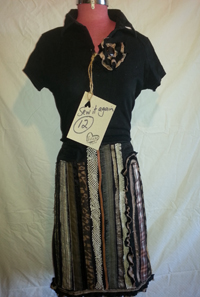
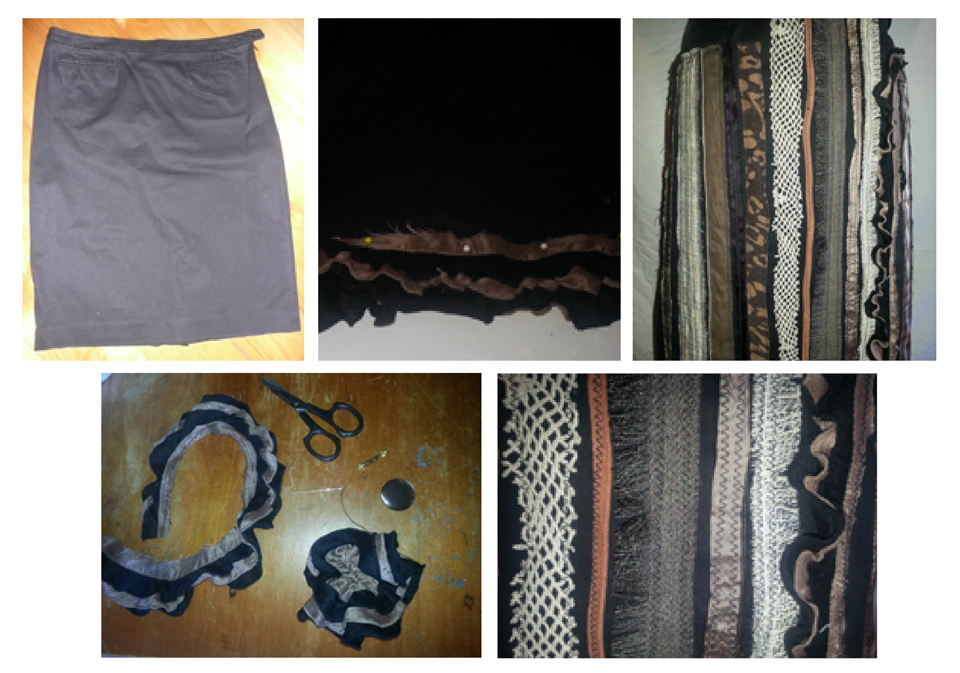
This skirt is for my friend Georgie Somerset. We cropped the old skirt to a length that suited her, then I cut up a silk top (forgot to photograph it) and used the frill as the new skirt hem and a brooch. Then to the skirt front, I sewed various strips gleaned from my silk off-cuts box and other oddments of tablecloth and ribbon.

Sew 12 web

Sew 11 – Beyond money and power

Linen and silk with eco-dyeI’m an agricultural scientist by training and my first professional job was as ABC rural reporter working in radio and television in Victoria and Queensland.

Now I’m on a 365-day journey with the Sew it Again project to inspire creative upcycling of natural fibre clothing and revive home-sewing as a life-skill akin to cooking.

In between these endeavours, as a communications consultant I’ve run issues-based campaigns such as the 612 ABC Swap It Challenge for health groups, Save the Aussie Banana for growers and water fluoridation for dentists.

Sew it Again is a campaign of my own making which emerged during leadership studies last year that changed my thinking about what really matters – and it isn’t money or power. I’m interested in values-based leadership mindful of Earth’s finite resources, so I’m now following my heart on a journey of creativity, empowerment, thrift, sustainability, ecological health and wellbeing.

My thinking aligns with that of Huffington Post editor-in-chief Arianna Huffington’s Third Metric campaign which is “redefining success beyond money and power to include well-being, wisdom, wonder, compassion and giving”.

Huffington said: “We’ll be opening up the conversation around all the ways our current definition of success is failing us, and putting the spotlight on the tremendous shift happening across the country—and across the world—as women and men seek a new definition of success that’s more sustainable and more humane.”

Sew it Again bridges memories of childhood, professional expertise, agribusiness networks and a love of nature with a desire to raise awareness about our escalating rate of textile consumption which is rising at three times the rate of population growth. FAO textile consumption survey 2013

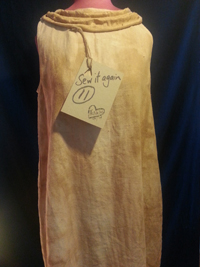
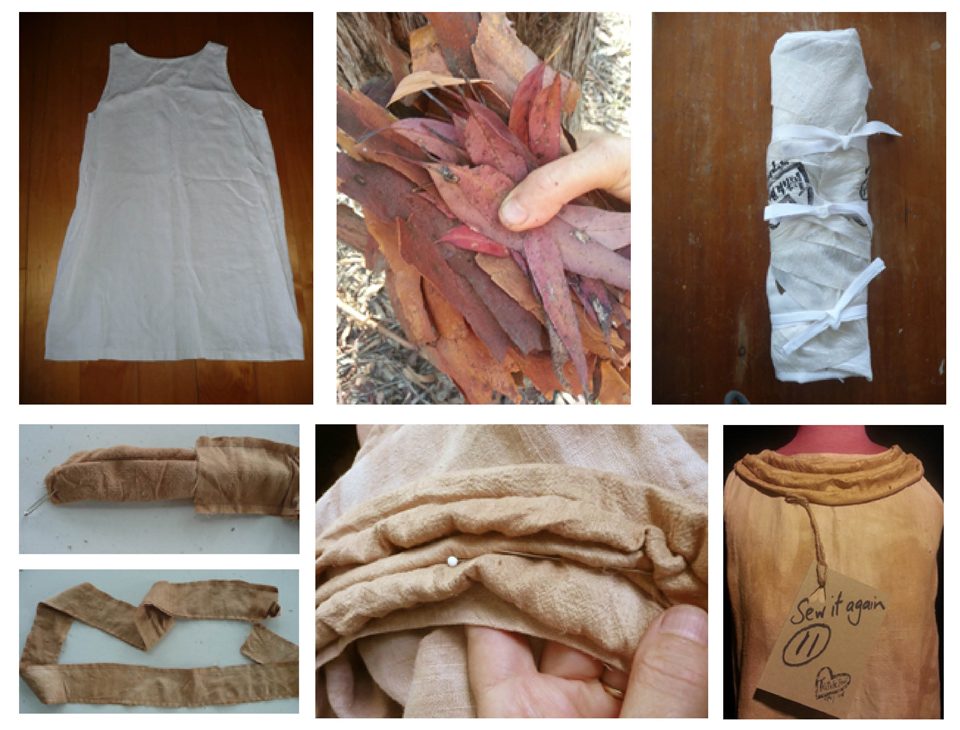
Today’s offering is an old linen dress I’ve had for years but wasn’t wearing. I gathered fallen bark on my morning’s walk and gave it a colour change, along with a piece of silk which I then hand-stitched around the neckline to add interest.Linen and silk dress with eco-colour

Sew 10 – Fasten with fabpins

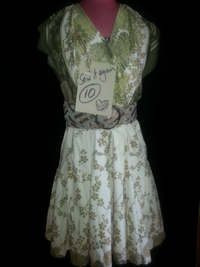
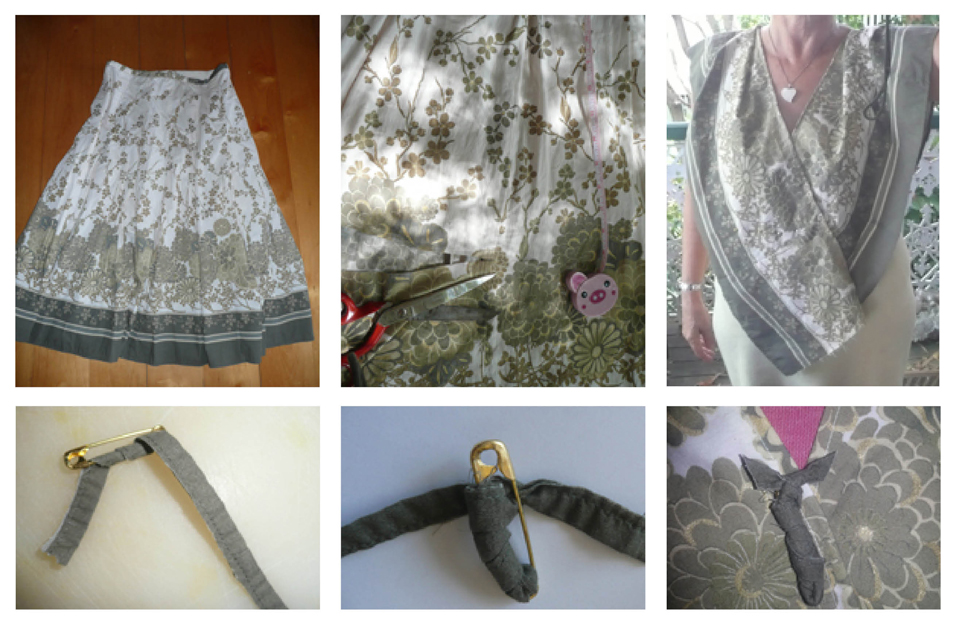
Sew it Again 10 webThis skirt was lovely in its day but wasn’t being worn so I’ve given it a second life as a dress that is fitted with the help of fabric-covered safety pins – which I’m calling fabpins.

You need to find good quality safety pins and wrap them bottom to top with a strip of fabric that is then anchored by a knot. They can be used in place of buttons, but ideally need to be unpinned and excluded from the wash.

Good quality cotton fabric such as was used for this skirt has a high thread count, feels beautiful to touch and can last for decades. It is a shame to see such garments tossed out when styles change and wearers move on to the next best thing keeping up with the latest fashion.

A great Opinion Letter in the 4 January issue of New Scientist magazine provides a fresh take on the idea of ‘keeping up with the Joneses’ which is relevant here.

Wiebina Heesterman from Birmingham UK suggests a switch to ‘powering down with the Joneses’ and challenging neighbours to take actions to help reduce waste and fix the climate.

Wiebina says then you can say things like: “We use far less energy than anyone else in the street, we only had to pay $500 for gas and electricity this year, what about you? Or: “Look at my 1920s dress: it belonged to my great grandmother – I bet you haven’t got anything that beautiful.”

I’ve got a few garments that belonged to my Great Great Aunt Winnie stashed in a top cupboard somewhere which I upcycled and wore during university days (back in the late ‘70s that was!). They’ll be ready for re-upcycling soon as part of my 365-day upcycling journey this year.

Sew it Again 10 construction webMeanwhile with Sew it Again 10, I cut off the bottom border of the skirt and cut it in two. I draped these two panels to form the top, making tucks at the shoulders and sewing the panels to the skirt band, which opens with a side zip. I sewed the top panels together at the side opposite the zip, and secured the overlaps front, back and zip-side using fabpins.

Sew 9 – Eco-fashion new values

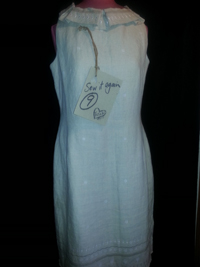
Linen dress with added collarA dress length that flatters your shape is a very individual thing. Below knee is unflattering for me, which is why I cropped the bottom off this dress and turned it into a collar.

There are some amazing ideas in Eco Fashion, a book by Sass Brown which chronicles sustainability leaders and their creations, and says one of the strongest trends in fashion is the expression of ecological, social and community consciousness.

But the forward by Geoffrey B Small who first recycled menswear in a Paris collection in 1996, pulls no punches: “Fast fashion, planned obsolescence, ignorance and waste rule.” Continue reading

Sew 8 – Sewing is a life skill

cool linen dressThis garment began life as a block-coloured linen skirt cut on the cross, which I’ve upcycled into a cool summer dress.

I grew up in a farming family, born of parents who came through the depression and learned to be resourceful. We grew our own vegetables and Dad butchered the meat on the farm in Otago, New Zealand.

Society’s resurgent interest in home-cooking reflects our re-valuing of the nutritional, seasonal, creative and pleasurable aspects of cooking wholesome food in the home.

I learned to cook and bake in our Great Grandma’s kitchen in the cottage. I learned to sew, knit and crochet with Nana – and I later learned other crafts like spinning wool and making paper from my aunt Kate McLachlanContinue reading

Sew 7 – Jumpers make fab skirts

Jumper-skirt conversionI do love cotton jumpers but they can become saggy baggy with age, which makes them perfect to be converted into a skirt for their second life.

Resewing clothes for pleasure, reward and sustainability is a 365-day journey I’m on this year as a way of demonstrating a different way of dressing by reusing and adding-value to natural fibres garments.

Back in 2006, a University of Cambridge study recommended the greatest beneficial change in future sustainability of textiles would occur if we purchased less clothing and kept it for longer.

The Cambridge report, Well dressed?, estimated UK consumers spent about £625 each on clothing in 2004. Increased spending coincided with dropping prices largely due to the rise of ‘fast fashion’ bringing faster turnover of styles than previously.

UK consumers are purchasing and disposing of around 35 kg of clothing and textiles per person each year, of which around 13% is collected for re-use, 13% is incinerated, and the remainder – 26 kg per person – is buried in landfill. I’m still looking for the Australian figures, if anyone can help?

We, as consumers, can drive change through the choices we make and these might include:

  • Buy second-hand clothing and textiles where possible
  • Buy fewer more durable garments and textile products
  • Lease clothes that would otherwise not be worn to the end of their natural life
  • Wash clothes less often, at lower temperatures and using eco-detergent
  • After washing, shake and hang your clothes to dry to minimise need for ironing
  • Extend the life of clothing and textile products through repair – and upcycling!

As Mahatma Ghandi said, be the change you want to see in the world.

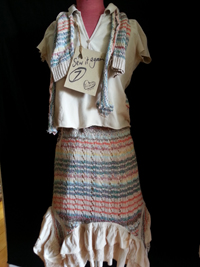
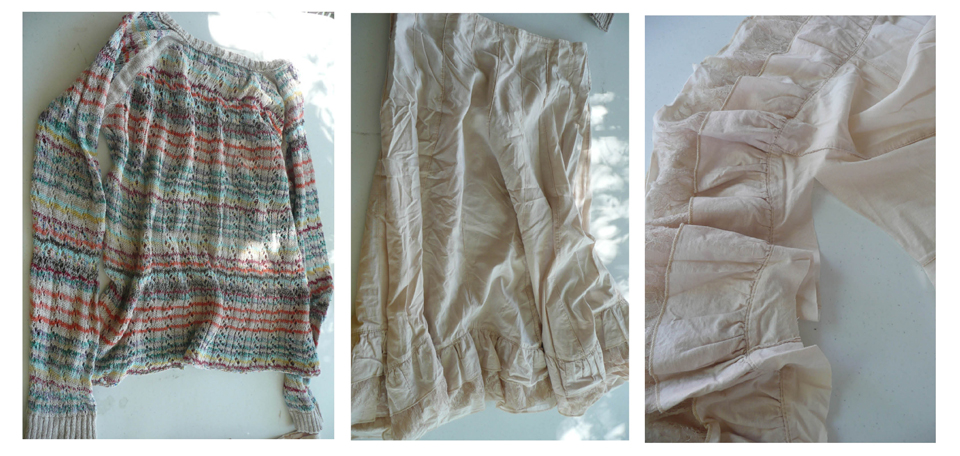
Through upcycling, jumpers make great skirts. Crop the sleeves off the jumper and then cut along the shoulders to open out. Add elastic at the waist. To embellish this jumper-skirt, I cut up a complementary cotton skirt. I added the bottom frill to the jumper-skirt and used the top part (of the second skirt) to line the new skirt. Am I making sense? I used the sleeves and an off-cut of the jumper to decorate a polo top, which I livened up by using pinking sheer scissors to crop the sleeves, trim the collar, and shorten.

Sew it Again 7 construction