Author Archives: Jane

Sew 6 – Cool cotton lives on

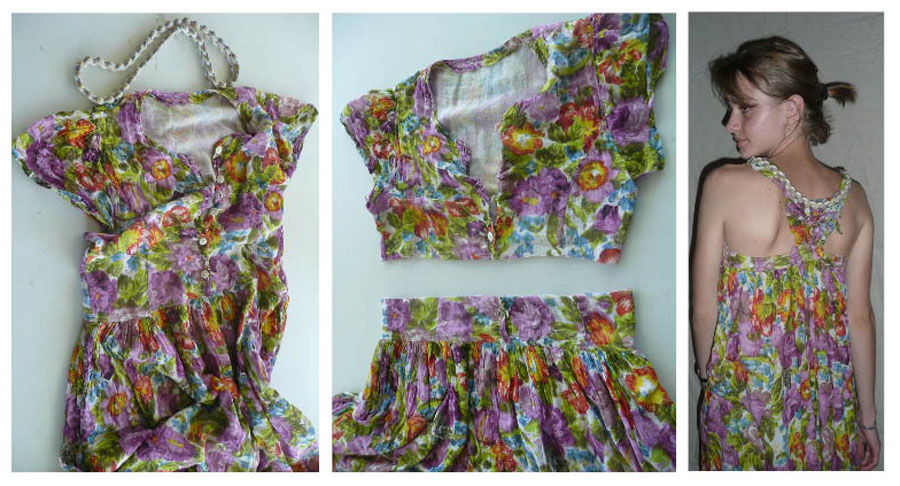
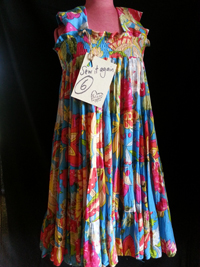
summer cotton dressAnother hot day in paradise, another simple way to give a cotton dress a second life – by lifting the waistline and thereby shortening the skirt.

On the other side of the world, you wouldn’t be wearing an Indian cotton number on the streets of New York right now – and if you did there’s a chance photographer Bill Cunningham might capture the moment.

I was lucky last night to catch the documentary Bill Cunningham New York repeated on ABC1 and was struck by his authenticity and single-minded dedication to his craft with the New York Times.

Bill’s life has been an obsession with clothes yet he upcycles his plastic poncho by using black gaffer tape to repair tears and works in utilitarian blue shirts.

He describes fashion as the armour to survive everyday life, and dressing the body as an artform. Yet he says 90 per cent of the clothes Americans wear are made outside America – and I’m sure the same applies in Australia as well.

But it doesn’t have to be that way. I’m on a mission to demonstrate that with a small investment of time and effort, you can re-make your clothes in your own home through creative upcycling.

Buying ready-to-wear clothing off-the-rack is quick and easy – when the styles suit your body shape, wallet and situation. But do we need new new? I’m all for recreating existing garments so the length and style is more individual and you will never run into anyone dressed the same way.

There are thousands, perhaps millions, of beautiful natural fibre garments stashed unused in our wardrobes, ops shops or discarded in landfill that can be rescued and refashioned. You just need to take a little time to look at them in a different way – as a natural resource worth reusing.

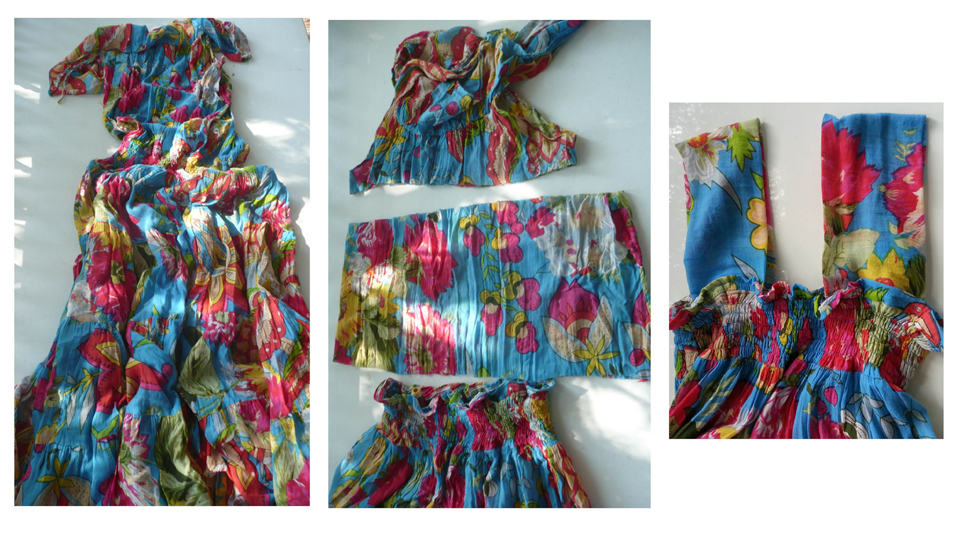
Today’s offering was a long cheesecloth cotton number with a shirred elastic waist, made in India and found in an op shop for $2. I chopped it off at the waist, lifted it up and attached straps made from the remnants of the top. It is much cooler now and so comfy without the gathered waist.
Making Sew it Again 6


Sew 5 – The magic of eco-dye

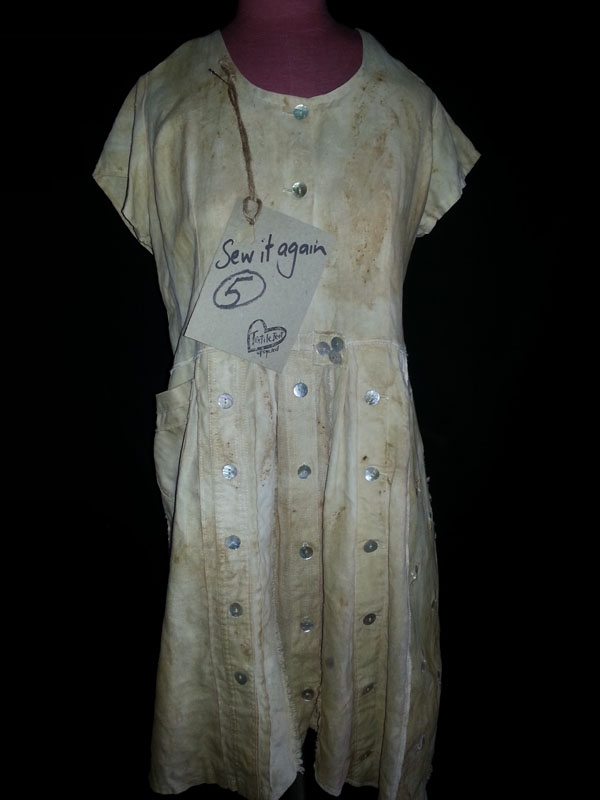
eco dye linen dressColour can be transformational, and each day we enjoy a full range of nature’s offerings from sunrise to sunset when we take the time to look.

By comparison, white and pastel-coloured clothing can seem dull, doubly so considering the bright, computer-generated fabrics designs around at the moment. Combined with an out-dated style, it is not surprising such garments remain stashed in the back of the wardrobe.

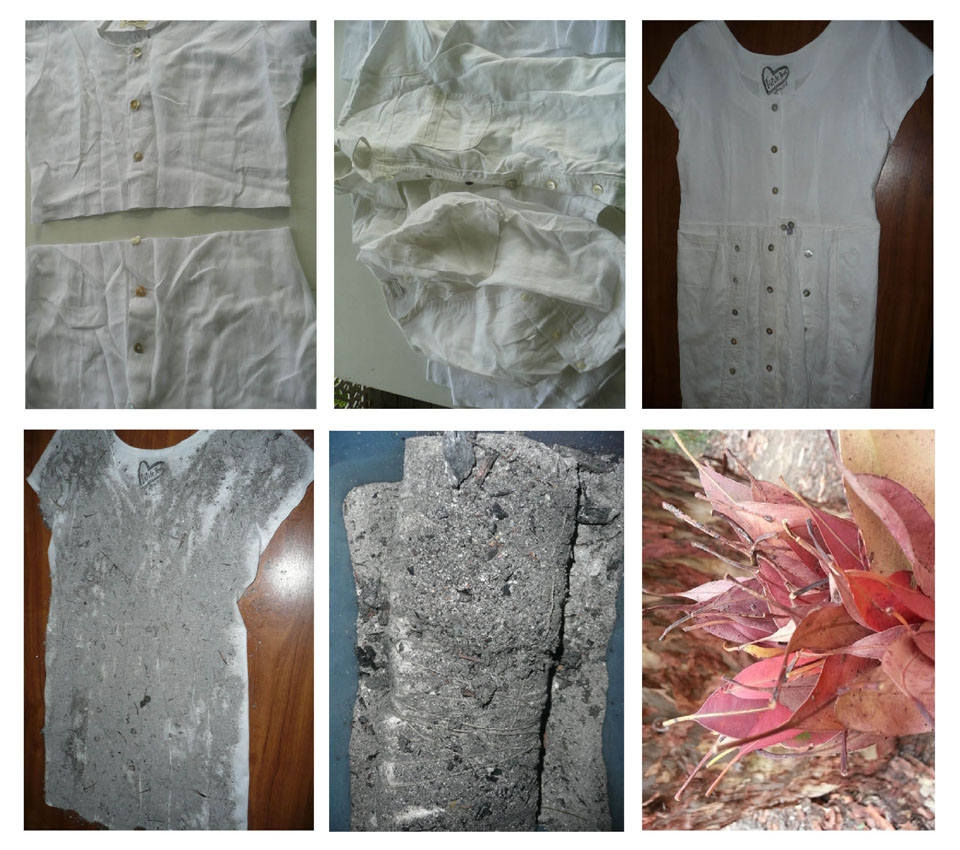
I have a few white linen numbers hoarded for years because I value the fabric and shell buttons. They have intrinsic value, but were not being worn. So I upcycled them and used red leaves from my regular bush walk to experiment with eco colour.

Fabrics from plant fibres (linen and cotton) don’t take to colour as well as protein fibres (wool and silk) so I went in search of more information at Brisbane Library and discovered the beautiful books of India Flint.

Eco colour and Second Skin brim with inspiration. Dyes from plants are a renewable resource and in Eco colour, India has catalogued an amazing array of combinations and permutations.

If you are not fussy about the colour, what it seems to boil down to is: gather leaves, simmer in pot for a while, place them on moistened garment, wrap into a bundle, return to pot over very low heat for another while, leave to cool in solution as long as your curiosity will allow. Voila.

The dye uptake will be enriched if you pre-prepare the garment with an alkaline solution such as ash water (from a fire) or washing soda. India suggests using protein such as cows’ milk or soy milk which you leave to dry on the fabric before you dye it. Adding rusty metal objects, such as chains or old tools, to the dye bath also helps fix the colour.

Today’s offering started life as a long linen dress with shell buttons down the front. I cropped it off at the waist and added a new skirt made from an assortment of other white linens with more buttons. I created the new skirt as a long rectangle which was pleated randomly as it was sewn in place using zigzag stitch. The lengths vary and pockets are as they appeared on the original garments. I left the dress in moist ash for a day, bundled it with gum leaves and brewed in a pot with more leaves and a rusty spanner.

The garment has lost some of its colour after washing, but can be over-dyed again later to enrich it further. More dye projects ahead – it is fun and easier than it sounds because anything goes.

dyeing linen using eco colour

Sew 4 – A simple summer sew

sewing sarong into dress We are sweltering in Queensland again and seeking ways to keep cool, so this offering is light and breezy – and easy.

Everything I’m making during this Sew it Again year is upcycled – even my display dummy was bought from an op shop. Older things are often better quality, they were made to last. That’s part of their attraction.

I’m going on this journey in 2014 in response to the excessive consumption that is all around us – the push for more, more, more, bigger, brighter, bolder – driven by those with a vested interest.

A new year is a chance to reflect on different ways of being. And it is gratifying to find others doing similar things: people such as the amazingly creative Melbourne-based Pip Lincolne who made A Year of Ethical Fashion pledge for 2014.

Pip’s pledge for 2014 is that when looking for things to wear, she will only:
     a) Buy from ethical makers or
     b) Buy second-hand or
     c) Make it myself or
     d) Wear things I already own or
     e) Borrow or swap garments with friends

I’m proud to be doing all of the above as I live my values of integrity, creativity, autonomy and purpose.

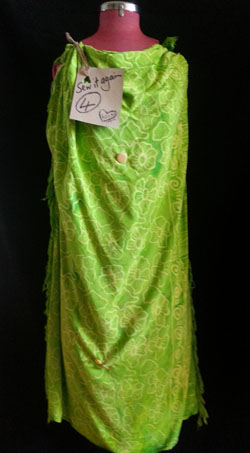
Today’s upcycle is for my friend Trudy Riesz, who wondered what to do with her many sarongs that are cheap and cheerful reminders of holidays past. They’re still useful for the beach or the pool, but not so useful for everyday dressing unless turned into a dress.

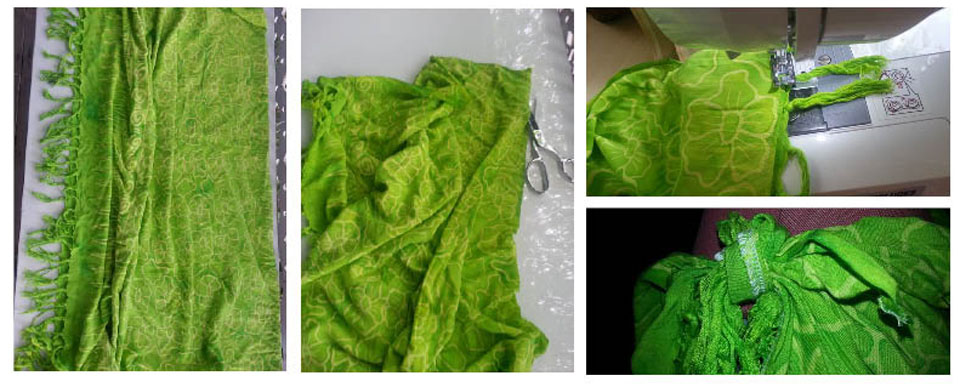
Cut the sarong in half across the middle. Flip one half so there is a fringe on either side, one fringe will be on the back piece and the other on the front piece, but that is barely noticeable when sewn together. Sew the two pieces together about 2/3rds of the way up each side, leaving the rest for your arm holes and a knot at the each shoulder. This sarong had a couple of marks on it, so I sewed buttons over them.

upcycle sarong into dress

Sew 3 – Who made your clothes?

Sew it Again 3We are naturally attached to our clothes on a physical, emotional, even spiritual level. We wear them next to our skin, the biggest living organ in our bodies intrinsically linked to health and wellbeing.

How we look and feel in our clothes is important at all stages of life, hence the multi-billion dollar global fashion industry.

But that industry had a watershed moment on April 24 last year, when 1133 people lost their lives in the Rana Plaza fire in Bangladesh.  One of many insightful reports is Fashion Victims story by Sarah Ferguson and Mary Ann Jolle on ABC Four Corners

Fashion is coming to consciousness because of people’s growing interest in the ethics of where and how our clothing is made.

A tweet came my way this morning thanks to London slow-fashion consultant Veronica Crespi @rewardrobe, highlighting the launch of the Fashion Revolution Day USA campaign.

“This is part of a global movement to honour the lives lost last April 24th by both asking and answering one simple question Who made your clothes? Let’s revolutionize the fashion industry through curiosity, discovery, and direct action. Wear a piece of clothing #insideout and become a part of this global movement on 04.24.14.”

I’ve been making my own clothes for about two decades (more on that another day) and am now remaking, repurposing, refashioning clothes through a campaign of my own making Sew it Again.

When we consider the bigger picture of where our society is positioned with regard to climate change, constant consumption and excessive use of limited resources, transformational thinking about the sustainable reuse of natural resources is required.

In his book People, planet, profit, Peter Fisk says managing a business with a higher purpose is like committing to a better way of life. Sustainability is like a lifestyle change – to eat more healthily, to keep fit, to explore the world. By adapting your outlook, you see and seize new opportunities.

Fisk says a purpose behind profit is about defining how the business ultimately adds value to society. A purpose is energizing. It gives us cause and focus, and gives people a reason to love us.

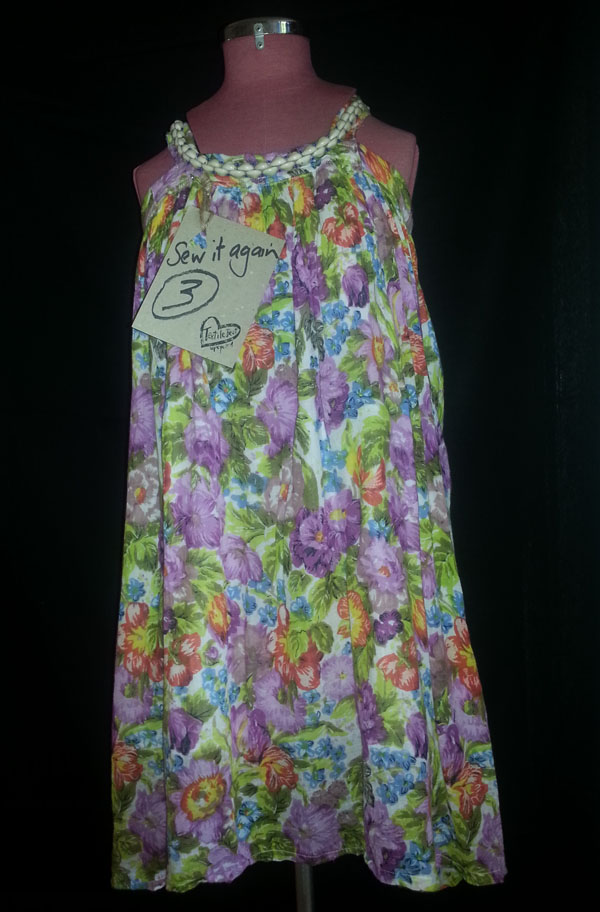
I created Sew it Again 3 from an out-dated op shop dress that had a button-down top and long gathered skirt. I cut the top off, lifted up the skirt to make a muumuu that’s cool on hot summer days. I hand-sewed a shell necklace to the front, and sewed the necklace to an offcut of the old bodice at the back to make it the required length. The model is Belinda.Sew it Again 3 making


Sew 2 – opportunity in op shops

Sew it Again 2 for webA few days ago while visiting friends in a nearby city I popped into their local op shop because this is sale time everywhere.

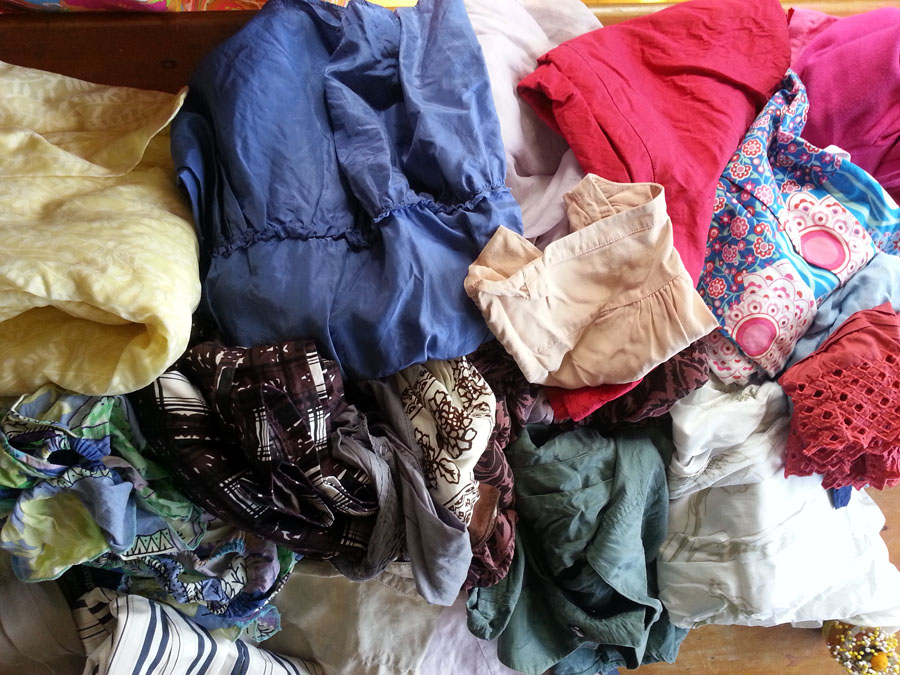
I bought 27 perfectly decent items of clothing for $38. These included dresses on sale for $2, ladies clothing half price, and fill-a-bag for $2.

Today I reflect on this collection. It includes six garments made of silk, four of linen, the others cotton. Together they weigh 6kg. Each was made from 1-2 metres of fabric, so let’s say they represent about 40m of fabric. All this valued at $38, maybe $1/metre.

What does this mountain of perfectly gorgeous cast-offs say about our society’s use of natural resources? Sure, some of these clothes belonged to people who are no longer with us. But many are cast-off by those caught up in clothing churn, moving on to the next fashion trend.

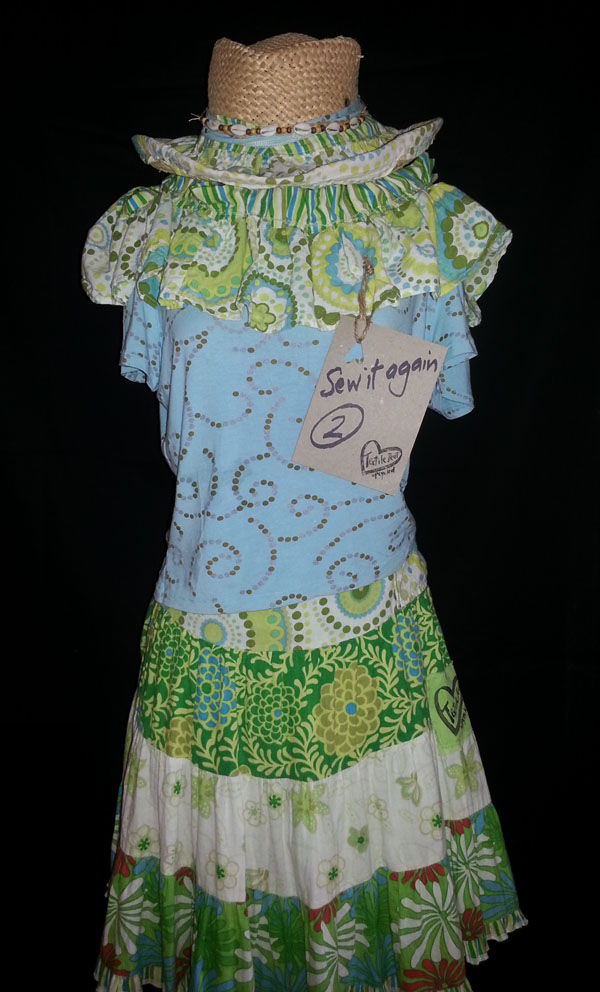
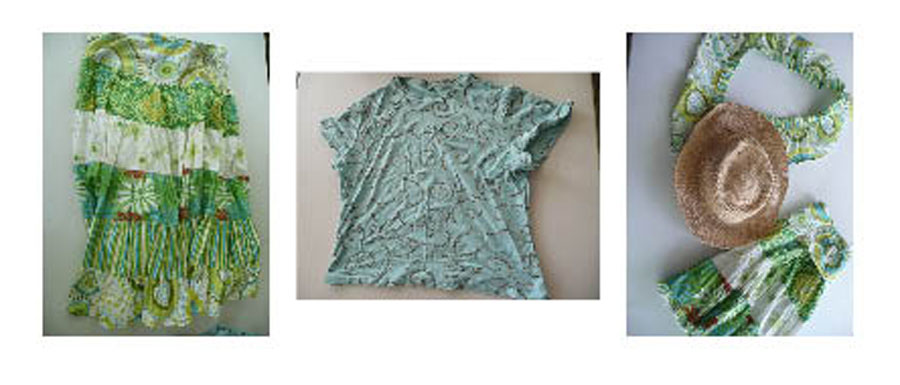
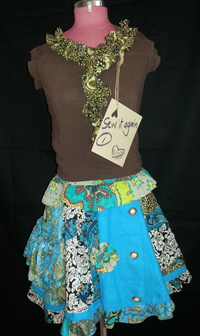
2 in construction webThrough action, I am demonstrating a different way. Sew it Again 2 is made by cutting off the bottom of a long skirt and turning that off-cut into a frill collar on a top and trim for an old hat. Cut the neck out of the t-shirt and sew on the frill using zigzag stitch. I sewed the frill twice for extra strength. The hat frill was sewn by hand.

Why do we feel a need to buy new new? Why buy new fabric and sew from scratch? Think about making old new. It only takes a few simple skills with a small investment of your time and creativity.

In his book A New Earth: awakening to your life’s purpose, Eckhart Tolle says that when you are authentic and don’t play roles, it means there is no self (ego) in what you do. When there is no secondary agenda to protect or strengthen yourself, then your actions have far greater power – and therefore capacity to influence and create positive change.

 In a world of role-playing personalities, those few people who don’t project a mind-made image but function from the deeper core of their being, those who do not attempt to appear more than they are but are simply themselves, stand out as remarkable and are the only ones who truly make a difference in this world. 

op shop web

The 6kg worth of silk, linen and cotton garments purchased for $38 at an Ipswich op shop.

Sew 1 – adding value to cast-offs

history skirtA new day, a new year and a new creative, sustainable and unique way of dressing in upcycled natural fibre garments.

You are what you repeatedly do. During 2014 I’m following my heart on a creative journey through this values-based Sew it Again project which has evolved from study with the Australian Rural Leadership Foundation.

The project is inspiring upcycling of natural fibres through daily posting of repurposed garments, such as this History Skirt, right, created for bright university student Belinda in my Textile Beat studio from pieces of discarded cotton dresses and shirts. Continue reading

Planning a year of sewing and creativity

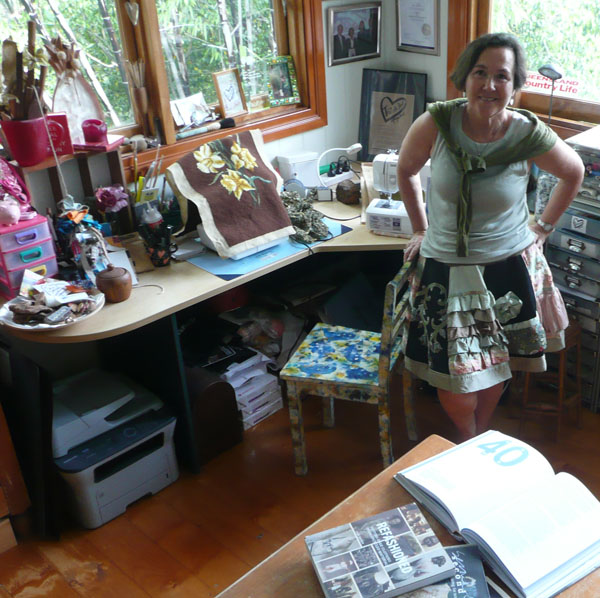
Jane studio webAs I relax in my beautiful light-filled studio anticipating a year-long campaign upcycling natural fibre clothing in what amounts to a zero-waste commitment to textiles, I am enjoying Kevin McCloud’s 43 Principles of Home.

Principle 40 in this book is: ‘Zero waste is not fairy tale pie in the sky. With proper municipal waste programs, thrift and prudence, it is possible’.

Reading books and online research has led me to follow my heart on a creative journey woven from the threads of childhood, education, work and family interspersed with a love of nature, natural fibres, simplicity and resourcefulness.

My research during 2013 confirmed an instinctive belief that we are churning through textiles at an unsustainable rate – global consumption of textiles has grown three-times faster than the world’s population.

According to recent figures*, world apparel fibre consumption grew from 39 million tons in 1992 to 70 million tons in 2010 – an 80 per cent increase in fibre consumption over an 18-year period, with most of the growth being in synthetic (non-cellulosic) fibres. During that same period, the global population rose 25 per cent, from 5.5 billion in 1992 to 6.9 billion in 2010.

Our Earth has finite resources so this escalating growth in consumption of fibres seems a kind of madness driven by unconscious greed, look-at-me fast fashion and a churning desire for newer, brighter and supposedly ‘better’ clothing.

Kevin McCloud says throw nothing away if you can help it and wear your clothes until they are rags – thrift is an admirable value that we have lost.

Of course we all enjoy new clothes and dressing well but like fast food, fast fashion is leading to over-consumption for the wrong reasons which may include chasing trends, wanting to fit in, retail therapy and stress relief.

I’ve been rescuing discarded natural-fibre clothing from op shops and other sources for years because I value them as natural resources. These wool, silk, linen and cotton garments may sometimes be out-of-date, in need of a stitch or a nip and tuck, but I see their beauty.

That’s why I plan to make a daily ritual of upcycling garments from my own and others’ wardrobes as a way of creating and sharing a different way of dressing that is mindful of the Earth’s finite resources.

It is a commitment I hope to meet, even while I am travelling to various locations in Australia – around my state of Queensland, Western Australia, New South Wales and the Northern Territory – and perhaps overseas as well – inspiring upcycling wherever I am.

I’m used to running campaigns for others, but now Sew it Again 2014 is a campaign of my own making based on ecological health and wellbeing. I hope you will share my journey with creativity, resourcefulness and a love for nature.

*FAO/ICAC World Apparel Fibre Consumption Survey July 2013 FAO-ICAC-Survey-2013-Update-and-2011-Text

**Kevin McCloud’s 43 Principles of Home: Enjoying Life in the 21st Century, Harper Collins Publishers, 2010

A 365-day eco-fashion project for 2014

These days few people know how to mend or sew a simple garment, yet this is a life skill akin to cooking. Fast fashion, like fast food, has taken over with an endless stream of cheap, disposable clothing – but at what price?

Not only is this exploitative and wasteful of resources, it’s taken away the simple pleasure of creating something of our very own to wear. Something unique that is crafted by our own skilled hands through imagination and energy.

While sewing from scratch can be expensive and sometimes disappointing, there is a seemingly endless supply of upcycling material languishing in wardrobes and opportunity shops.

Sew it Again is a 2014 project which aims to revive home sewing to be:
•   empowered – wear unique garments in colours you like that suit your shape
•   sustainable – create eco-fashion, reuse natural fibres and reduce waste
•   thrifty – enjoy affordable, natural, one-off outfits that won’t break the bank

For years, Jane Milburn has been stockpiling clothing made of natural fibres such as silk, linen, wool and cotton by rescuing garments from op shops and friends. Five wardrobes later, something has to give.

Through 2014, Jane will refashion 365 garments for a second life as part of a creative journey inspiring upcycling of natural fibres. Please revisit this site after 1 January 2014 to see the results.

Why does this matter?

Global textile use is growing at a rate three times faster than the population. Since 1992, the world’s population has increased 25 per cent while textile consumption has increased 80 per cent. Read more in the World Apparel Fiber Consumption Survey July 2013 FAO-ICAC-Survey-2013-Update-and-2011-Text

In her book Overdressed: The shockingly high cost of cheap fashion, Elizabeth L. Cline said: Every year, Americans throw away 12.7 million tons, or 68 pounds of textiles per person, according to the Environmental Protection Agency.

But all is not lost, because Cline also said: According to Time magazine, there were approximately 35 million sewing hobbyists in the United States in 2006, up from 30 million in 2000. And the number is growing as more people tap back into the pleasure of making something themselves.