Author Archives: Jane

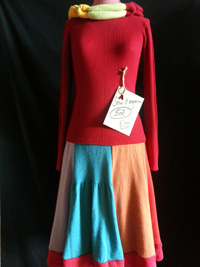
Sew 56 – Fashion Revolution coming

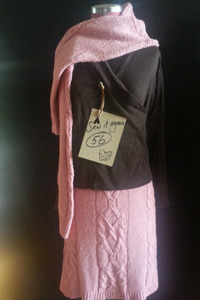
silk jumper to skirt and scarfThis was a knit fit for refashion. You know those long jumpers that were fashionable in the ‘90s? This was one of them that I chopped and changed into a skirt and scarf.

The story of your clothes – where they come from, who made them and what from – suddenly became relevant all over the world after fashion’s footprint was set alight by the devastating Rana Plaza fire in which 1129 people died on 24 April last year.

This year on April 24, Fashion Revolution Day will remember those workers lost for the sake of fast fashion at cheap price.

A Choice magazine article on ethical fashion, Australians spend $2288 on clothing and footwear this year – but it’s almost impossible to discover the clothing supply chain of its origins.  Continue reading
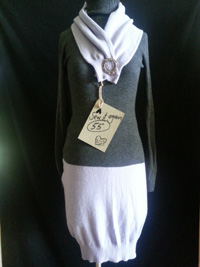
Sew 55 – Wool jumper to skirt

jumper to skirtRefashion a jumper to become a skirt and scarf that utilises the beautiful drape of wool knits.

I’m excited to now have the Jumpers and Jazz Festival at Warwick Queensland in my calendar for July as this event aligns so well with what I’m doing. Stay tuned for info on the Jumper-to-skirt garment surgery workshop at Abbey of the Roses.

This quirky country Queensland festival is now in its 10th year and my connection with it was brought about by Sue Hamlet of Fledge Designs, who creates its brochures and is a regular Sew it Again supporter – thanks Sue for ongoing encouragement!

My 365-day Sew it Again project to demonstrate a different way of dressing by refashioning existing clothing emerged from study last year for a Graduate Certificate of Australian Rural Leadership. This James Cook University course run with the Australian Rural Leadership FoundationContinue reading

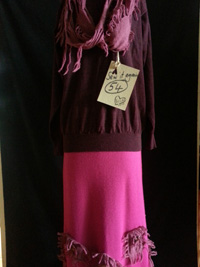
Sew 54 – Wool for winter comfort

wool knit upcycledThis plum outfit is from op shop wool separates linked by scarf pieces hand sewn with vintage buttons to dress up skirt.

Wool drapes beautifully, is comfortable and toasty warm in cold weather. Merino wool is particularly soft, with amazingly superfine wool being produced in cooler parts of the nation.

Athough Australia no longer rides on the sheep’s back, it still leads the world in wool production by supplying high-quality natural fibre for the world of high-fashion in Europe and the bourgeoning Chinese market.

The National Farmers Federation website says total production of wool in Australia was 368,330 tonnes (greasy) in 2011, with wool exports valued at $3.047 billion and major markets for Australian wool being China ($2.2 billion), India ($209 million) and Italy ($178 million). Continue reading

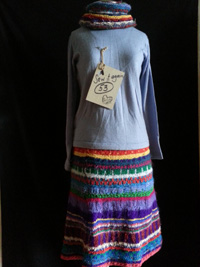
Sew 53 – Knitted scraps skirt

skirt made from knitted wool scrapsAn over-large vest knitted from op-shop wool/cotton scraps is resewn into a skirt and neck-warmer.

This 365-day upcycling journey I’m on during 2014 is demonstrating how everything old can be new again. It is a way of clearing out my cupboards, remaking, mending, refashioning and sharing ideas for a different way of dressing.

This vest was a series of three I knitted for myself when the boys were little – two decades ago. Back then, I used scraps of wool and cotton from op shops on round knitting needles and guesswork pattern.  I’ve definitely gone full-circle – back to the future op shopping and upcycling again two decades later!  Continue reading

Sew 52 – History Skirt from jumpers

history skirt from wool jumpersThis history skirt is refashioned from pieces of eight wool jumpers, with another jumper as waistband and hem.

Being winter in the northern hemisphere, I’m doing some woolly upcycles since there’s growing interest in sewitagain.com from United Kingdom, Italy and United States.

Nothing is ever entirely original in this world it just evolves from something or somewhere. In his book Think! Before It’s Too Late, Edward De Bono says the human brain is designed to set up routine patterns and to use and follow these patterns.

He says all valuable creative ideas will be logical in hindsight. Creativity is not a mysterious gift or special talent – it is the behaviour of a self-organising information system that makes asymmetric patterns (the brain).  Continue reading

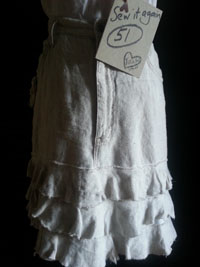
Sew 51 – Jeans to rara skirt

jeans to rara skirtLinen jeans becomes rara skirt by chopping below zip, extending skirt and adding frill made from off-cuts.

Reusing and resewing from existing clothing is an easy way to upgrade/revive/extend your wardrobe and I’m on a mission to do that for better or worse for 365 days this year.

Why? One reason is the ecological impacts of constant consumption. Society’s endless chase of new clothing consumes resources at the production end (water, energy, nutrients and/or petroleum) and results in pollution at the disposal end (dumps, leaching and/or methane).  Continue reading

Sew 50 – Chopping off hemlines

upcycled skirt suitA long bias-cut skirt is updated by cropping to knee-length then worn as is, or with hem-off-cut recast as collar or wrap.

Wikipedia defines fashion as a general term for a popular style or practice, and often refers to the newest creations of textile designers. As fashion trends emerge they’re unique and stunning – that’s the nature of fashion. But in time they tend to look and feel dated – like a planned obsolescence.

That’s where upcycling comes in. By resewing existing garments, you can recreate them for a second life using simple home-sewing techniques as I’m demonstrating with my 365 day Sew it Again upcycling campaign.

Upcycling is a greener way of recycling – finding a new purpose for unwanted stuff instead of moving it on.  This UK Upcycling website says “upcycling is all about taking disposable things and creating something useful from them.  Usually the only energy being used is your own and it can save you money too. Continue reading

Sew 49 – Renovation by resewing

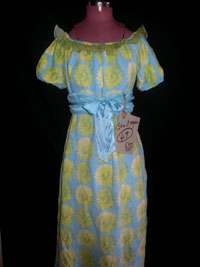
upcycled peasant dressTwo so-so garments of matching colours merge to be a brighter whole, with silk top sliced and diced to embellish linen dress.

This Sew it Again task I’ve set myself is a labour-of-love resewing a garment a day during 2014 to demonstrate a different way of dressing and I find inspiration everywhere.

“One of the best skills a girl can learn is to sew.” As I read these words last night, my heart sang.

Social activist and blogger Mary Dickinson said this in U on Sunday’s Inside my Wardrobe column: “I have been sewing since I was 10 so now I can buy something, if necessary, that is too big and take it in or chop the sleeves off and change it. I think one of the best skills a girl can learn is to sew.”  Continue reading

Sew 48 – Have crush on linen

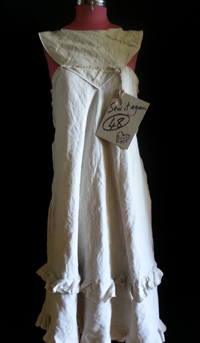
upcycled linen dressThis linen bias-cut skirt turned dress with addition of a bodice made from scraps sewn to an old piece of sheeting.

If you’ve been following Sew it Again, you know I’m on a 365-day journey devising and sharing ways we can take unworn clothes from our wardrobe and resew them for a second life.

Yesterday I attended the Meet and Greet at International House college at The University Of Queensland in my capacity as a director/honorary secretary on the Board of Management and spent time with the fabulous 2014 student leaders.

I was wearing Sew 47 and thrilled by their interest, quick understanding and excitement about the concept of resewing and reusing existing clothing – because as uni students they need to be thrifty and resourceful in the way they dress.  Continue reading

Sew 47 – Refashion your own

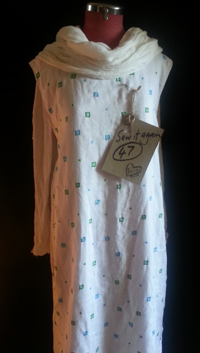
upcycled linen skirtmakerI refashioned this op shop shirtmaker by removing sleeves and collar, turning back to front and draping a scarf at neckline.

Another day, another great read – this time Eco chic: The savvy shoppers guide to ethical fashion by Matilda Lee, who in 2007 when it was published in the United Kingdom was editor of the Green Pages of the Ecologist magazine.

Naturally Lee does a fantastic job of canvassing all the issues, and I loved the way she introduced the book with a quote from Coco Chanel: “Fashion is not something that exists in dresses only. Fashion is in the sky, in the street, fashion has to do with ideas, the way we live, what is happening.”

There is so much quality information in Lee’s book about the science behind fibres, fabrics and fashion and the stories behind the clothes we wear.  Books like this get me thinking about where I fit in the scheme of things, on my 365-day mission to reposition home-sewing as a life skill akin to home-cooking.  Continue reading